
How to Spend One Day at Glacier National Park
|
|
Time to read 4 min
|
|
Time to read 4 min
Carved by ancient glaciers and crowned with rugged peaks, Glacier National Park is a sprawling wilderness with breathtaking vistas around every corner. If you have one day to explore this corner of Montana wilderness, these are the hikes, lookouts, and drives you don’t want to miss at “The Crown of the Continent”.
Glacier National Park is open 24 hours a day, 365 days a year. However, much of the park is inaccessible during the winter months. We recommend visiting from May to September, when the trails are clear and you can experience the park to the fullest.
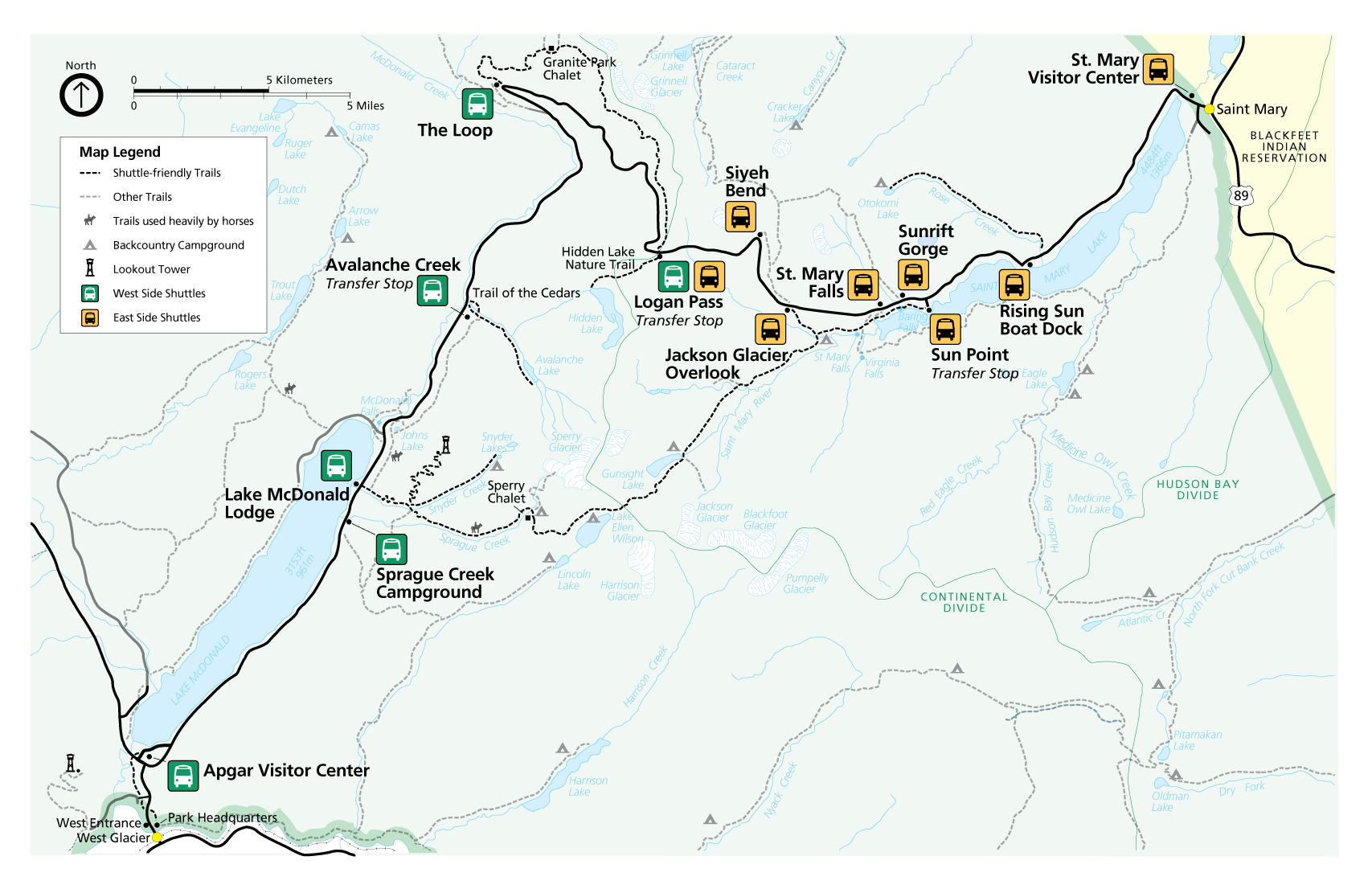
The park has seven entrances, each situated near popular hiking trails or lodging areas. We recommend the West Entrance, located near the Apgar Visitor Center. Or the St. Mary Entrance on the East side, depending on where you want to start your day. For our itinerary, we started at the St. Mary Entrance and worked our way west toward the Apgar Visitor Center.
During the summer (June and July), the sun comes up well before 6:00 am at Glacier. But the early wake-up to catch an alpine sunrise is well worth it! Alpenglow—the soft, rosy light that bathes mountain summits in shades of pink and red—occurs just before sunrise when the sun is still below the horizon. The warm glow rising along the mountain peaks is truly unmissable.
Our favorite place to watch the sunrise is Sun Point. There are dozens of incredible places to watch the sunrise at Glacier, but none of them are quite like secluded Sun Point. Perched above St. Mary Lake next to a dedicated parking lot and short trail, Sun Point is easy to access, but often completely quiet in the early morning hours.
To get to the viewpoint, enter the park at the St. Mary Entrance and walk the easy Sun Point Nature Trail about 0.2 miles until you reach the St. Mary Lake Overlook. From there, you’ll have panoramic views of the glacial lake and towering peaks. Be sure to pack a headlamp or flashlight for the walk. The walk is short, but rocky. We also recommend bear spray since grizzlies are common in the park.
Driving Glacier National Park means traversing one of the most extraordinary engineering feats of the 20th century. The iconic Going-to-the-Sun Road is a 50-mile transmountain highway, designed by the National Park Service and the Bureau of Public Roads, that began construction in 1921. Over a decade, engineers carved paths through granite ridges, such as the Garden Wall and the Continental Divide at Logan Pass, uniting the east and west sides of the park.
Today, this monumental achievement is designated as both a National Historic Landmark and a National Historic Civil Engineering Landmark. It’s also one of the most incredible ways to experience Glacier National Park.
To drive Going-to-the-Sun Road, we recommend starting at either the St. Mary Entrance on the east side (like we did!) or at the Apgar Visitor Center near the West Entrance. Both entrances have large parking areas, a visitor center, and are a starting point for the free park shuttle, if you prefer. (If you start at the Apgar Visitor Center, you may need to register your vehicle in advance . You can do this at no additional cost when you purchase your park pass.)
This drive usually takes two hours without stops. Since you’ll likely want to stop at overlooks and hikes along the way, we recommend planning to spend four hours going from the east side of the park to the west side.
If you’re not comfortable driving the steep road yourself, you can take the free park shuttle from 7 am to 7 pm without a reservation . This shuttle will stop at major overlooks, such as Logan Pass and Sun Point, as you cross the park. (If you prefer a guided tour, you can book a Red Bus Tour through the official national parks concessionaire.)
Logan Pass is a must-stop along Going‑to‑the‑Sun Road, and just behind the Logan Pass Visitor Center is the trailhead for Hidden Lake Overlook. This moderately difficult 2.7-mile out-and-back hike ascends 500 feet through wildflower‑dotted meadows on a paved path and raised boardwalk.
As you hike, you’ll pass through open tundra between Clements and Reynolds Mountains. Once you reach the viewpoint, you’ll overlook Hidden Lake and Bearhat Mountain. From there, you can continue down Hidden Lake Trail to the lake shore for a picnic or head back to the trailhead.
After a long day exploring the park, there’s nothing quite like a beach sunset over the lake. As you may expect, the best places to watch the sunset are on the west side of the park. Our favorite is historic Apgar Village Beach on Lake McDonald .
This beautiful beach is popular for sunset photography, but you’ll have plenty of time to get there and relax since the sun doesn’t set until 10:00 pm in the summer months! Days at Glacier can feel endless, and the long hours are worth it to experience the alpine glow at both sunrise and sunset. As the sun sets to the west, the east-facing mountains turn pink and orange in the alpenglow. It’s an unforgettable sight at an unforgettable park!
Glacier National Park remains a wild frontier. Each viewpoint, hike, and drive across this majestic landscape is a reminder of nature’s raw power and timeless beauty. As you hit the trail (and road!) at Glacier, we hope you feel as inspired as we did exploring Montana’s wilderness.